Total Pageviews

Sunday, 16 February 2014

AM review: The Arctic Monkeys at the peak of their powers

Although it’s hard to overstate the tremendous impact Sheffield rockers Arctic Monkeys have had on the British music scene in recent years, it’s also fair to say that until now they’ve failed to record an album truly worthy of classic status. Despite record breaking sales, each of their four previous efforts has possessed their fair shares of inconsistencies and weak links, preventing the quartet from hitting their full potential, at least in the eyes of the critics. But everything has changed with AM, a record so powerful and intelligent that it smashes the Monkey’s so called potential into pieces as one of the greatest albums of the past decade.

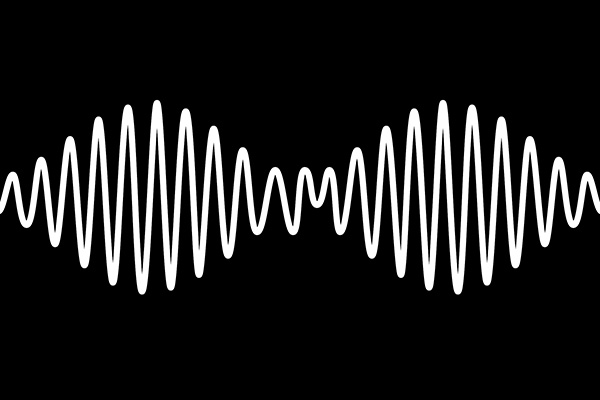
Despite AM’s minimalist analogue wavelength cover design, one of the record’s greatest strengths is seamlessly merging the old school rock n’ roll of albums like their debut Whatever People Say I Am, That’s What I’m Not with more modern effects and styles. This is no more apparent than on opener and lead single Do I Wanna Know, as a singular, jarring riff builds into a crescendo chorus of power chords and soprano backing vocals. Lyrically it’s clever if not profound and is thematically similar to the Monkey’s previous work (love, sex etc), “being wondering if your heart’s still open and if so I wanna know what time it shuts” being one of the finer examples of frontman Alex Turner’s technique; by no means a modern Morrissey but undoubtedly one of the most inventive songwriters around today. Speaking of singing, Turner’s delivery on AM marks a great improvement in confidence, although the liberal use of wavering vocal effects occasionally appears to hold back his talents.

Another of AM’s strengths is in wearing its influences on its sleeve without becoming a homage rather than a piece of art in itself. NME magazine seems to be confusing Turner with David Bowie far too often these days, but the spaced out guitar licks of I Want It All and the dreamy developing piano part in No.1 Party Anthem feature more than a touch of The Thin White Duke circa Ziggy Stardust and the Spiders From Mars, while Arabella’s tectonic start-stop riffs could have easily been taken from an early Black Sabbath record. Closing track I Wanna Be Yours is even audacious enough to rip its lyrics directly from legendary punk poet John Cooper Clarke. It’s fortunate that with all these musical references the songwriting is strong enough to prevent sections of AM from being shameless copies.  However the really wonderful thing about the album is that, like Nirvana’s Nevermind, there’s something for everyone in its 12 songs. R U Mine, with its crashing drums and Presley-esque drawl sounds like Whatever People Say I Am, That’s What I’m Not crossed with 1950’s rock n’ roll, while No.1 Party Anthem’s piano driven ballad is akin to John Lennon’s Imagine or Bowie’s Lady Stardust and the brilliant heavy metalish blast that is Arabella is undoubtedly what Kerrang readers would have come up with if asked to design an indie band. With all these conflicting styles and influences it’s a wonder AM doesn’t become a confused mess of a record, but it’s superbly held together by the band’s stunning musicianship and Turner’s consistent, comforting voice.  

AM represents the Arctic Monkey’s at the peak of their powers, a band that have finally written a truly phenomenal album after 11 years of trying since their conception in 2002. Despite its occasional slips, AM can make you dance, sing and cry and is not only one of the best albums of 2013, but one of the strongest in recent memory.
9/10
Sunday, 26 January 2014

American Hustle review: How to hustle Oscars

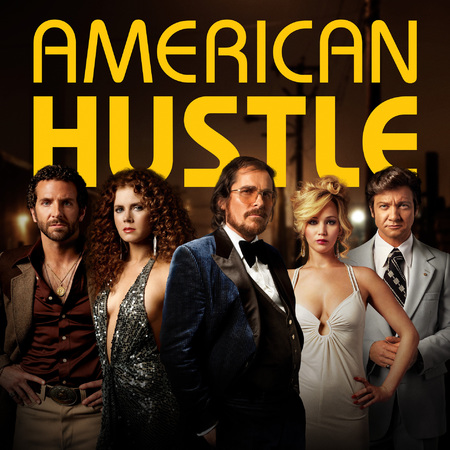
Showered with stellar reviews and ten Oscar nominations on its release, American Hustle certainly looked like a contender for the best film of 2013 with its big budget and all star cast. But A-list actors and high production values don’t always produce a classic film, and it’s unfortunate that this is a perfect case in point. It’s by no means a poor movie, but American Hustle might just take home the award for the most overrated film of the year.

In a story loosely based on true events, Christian Bale plays Irving Rosenfeld, a brilliant and successful conman who works with his partner in crime Sydney Prosser (Amy Adams) to scam desperate business owners. Of course, it’s not long before they’re caught red-handed by FBI agent Richie DiMaso (Bradley Cooper), who threatens to jail them unless they can provide the evidence necessary to arrest four corrupt congressmen through a con of epic proportions involving the Mayor of New Jersey. It’s a plot of a suitably massive size for your average $40 million Hollywood blockbuster, and the scriptwriters make no secret of their ambition to tell a story full of twists and turns with a running time just short of two and a half hours. However, lofty ambitions are brought crashing down to earth by some truly dreadful editing; a vast number of throwaway scenes and an overstretched script result in the film loosing much of its coherency and even becoming dull. You can’t help thinking that in accruing an Oscar nomination for this shocking performance the editors are the real conmen here.

Despite poor and inconsistent editing turning the tale into a sloppy and confusing affair, American Hustle is by no means without merit. The acting performances are, on the whole, superb; Bale brings a humorously sleazy streak to Irving’s character and Cooper is excellent as the unhinged and unstable Richie. Jennifer Lawrence also provides a scene stealing flair as Irving’s unpredictable wife Rosalyn, although her screen time is unfortunately limited. The overlong running time brings some benefit too in allowing the actors time to develop on screen, giving intense insights to the inter-character relationships. There are some great performances on the part of the minor characters too, with Robert DeNiro giving his iconic grizzly showing as mobster Victor Tellegio. Aiding the character development is the script, which despite its length and wealth of throwaway material is occasionally fantastic, allowing these top notch actors to achieve their full on-screen potential with some killer lines and darkly funny dialogue.
And you can’t accuse the movie of lacking style either; American Hustle wears its 1970’s setting like a badge of honour with classic costumes and hairstyles counterpointed by a vibrant soundtrack featuring musicians as varied as David Bowie, Elton John and The Electric Light Orchestra. These details create a fantastic sense of place, but the overdrawn plot and script prevent the movie from being truly atmospheric.

American Hustle is a film set in high ambitions, and in its acting and sense of style it more than achieves them. However, abysmal (and Oscar nominated) editing mar the impact of the whole picture, allowing the story to become difficult to follow and damaging the authenticity of the direction and atmosphere. It might aim high, but American Hustle falls dangerously short in many aspects, forcing you to wonder where those ten Oscar nominations came from.
6/10

(Credit to my pal Jed for the review title)

Thursday, 23 January 2014

Breaking Bad, Season 1 review: Bryan Cranston shines at the start of a saga

In the September of last year, the programme many have hailed as the greatest American television drama of all time came to its dramatic conclusion, five years and sixty two episodes after its inception. Now that the dust surrounding Breaking Bad’s final episodes has finally cleared, what better time to revisit the show’s first season, originally aired back in 2008?

American popular culture has forever cherished a love affair with drug dealing; The Wire for instance; one of the most critically acclaimed US TV shows in history; focused on the efforts of the Baltimore Police to crack down on the rampant local narcotics trade. Breaking Bad is something else though, in that it takes its cynical and uncompromising stance from the perspective of the criminals themselves. Walter White (Bryan Cranston) is a quiet and mild mannered chemistry teacher living, to a certain extent happily, with his wife Skyler (Anna Gunn) and his son Walter Jr. (RJ Mitte). Of course, events take an unpleasant turn on Walter’s 50th Birthday with the discovery that he has contracted terminal cancer, and it’s not long before he’s cooking methamphetamine with former student Jesse Pinkman (Aaron Paul) to generate extra money for his family’s future. The show’s sharp and intelligent scripts draw a wealth of black comedy in the early episodes of the series by juxtaposing Walt’s timid persona with the murky and violent world of illegal drugs, but more impressive than this is the sriptwriters’ grasp of the importance of character. By the conclusion of the first season, there are no cut-out protagonists, with every character given time to develop into a believable person, and still better are the performances given by the actors themselves. Cranston is perfect as Walt, presenting a dark portrait of an utterly pathetic man adapting to a life of crime and creating a character that can be pitiful and terrifying almost simultaneously. Aaron Paul also shines as amateur dealer Jesse, both angered by his former teacher’s slip into the drugs trade and impressed by his professionalism and attention to creating a “reliable product”.

Where this first season can be accused of making mistakes is in its plotting. Always intended as a slow burner, the programme certainly takes more time than it needs to on subplotlines in order to stress the importance of its moral decisions and to develop its characters. However, it’s all too easy to get bogged down in a plot detail while using this technique, which is exactly what happens on several early episodes. While these do wonders for giving extremely minor characters lives of their own, they lack enough action and conflict to make them particularly entertaining or watchable. Fortunately, the scripts pick up the pace towards the finale of this seven episode series to set up a shocking set piece conclusion.
So a first series which is in many ways transitional fails to instate the dramatic, overarching plotlines employing in later seasons for consistently exciting episodes, but Breaking Bad is at its best when it’s somewhat understated anyway. By mixing constant development of character relationships with some intense set pieces the series manages to create television drama at its best by the final episodes, and paves the way for the darker and more spectacular seasons to come.

7/10

Monday, 13 January 2014

Korn review: Metal's most intense album

Time has not been kind to nu metal. Despite wild popularity in its late 90's heyday, the subgenre is now remembered as an inferior rebound to the grunge scene, prompted by the suicide of Nirvana frontman Kurt Cobain. As such, nu metal's biggest bands are often thought of today as copyists lacking in originality and imagination, but what's often forgotten is that some of the best albums in rock history were recorded by bands of this underappreciated genre; Deftones White Pony, Linkin Park's Hybrid Theory, and of course the greatest of them all: Korn's self-titled debut alum. Critically revered on its release twenty years ago, does the record today retain all of its brutality, originality and lyrical relevance?

File:Korn-Korn.jpg
Without even hearing a single note of music, it's obvious that Korn is not going to be easy on the ear. The now-iconic album sleeve displaying a young girl peering up at a tall, leering figure seen only in shadow instantly infers the dark undertones of the music within, as well as establishing an early theme of the loss of innocence. Opening with a tectonic scream of "are you ready", Korn quickly establishes the band's trademark sound of hip hop and rap elements merging with jarring metal riffs, creating a violent and uncompromising noise as early as first track Blind. Throughout the record, melodies are accompanied by low, never-ending bass riffs, resulting in an agonised and despairing sound  counterpointed by the album's lyrics. Singer Jonathan Davis describes Korn's songwriting as having been heavily influenced by his work on child autopsies, and this truly shines through on a number of overarching lyrical themes dwelling on topics as controversial as child abuse and mental illnesses. Combining this with skin crawling lyrical imagery at word level leads to songs which can be almost painful to listen to in their unflinching intensity and anger. Davis' vocal style only heightens this feeling, his remarkable switching between scream and wavering soprano giving a disturbing touch to many songs and becoming a totem for future metal singers including Slipknot's Corey Taylor.

 While it's easy for bands to create such heavy and intense sounds that it becomes almost white noise rather than music, Korn rarely takes that path because of how cleverly it's written. Despite it's unpleasant themes, it's lyrically superb, and brilliantly memorable riffs on songs like Blind and Divine suggest a young band full of ideas. The shocking juxtaposition between signwriting genius and horrifically-themed lyrics is no more apparent than on final track Daddy, an epic 9 minute hate anthem relating to Davis' experience of sexual abuse as a young child. Dark and focused melodies and riffs build to a stunning climax of Davis screaming wildly and bursting into anguished sobs alongside the album's most strikingly violent lyrical images.

20 years on, Korn remains one of the greatest and most intense metal of albums of all time, and was the inspiration for a new generation of bands including Sepultura, Machine Head and Slipknot. It's songwriting is undeniably brilliant and it's full of intelligent themes and meanings, and is a rare example of total and uncompromising focus in a heavy metal record.

9/10